



 NEWS

 Inter World Steel
Search for "steel supplier" in Indonesia and you will find hundreds of names: mills, distributors, building-material shops, and traders with no warehouse at all. All of them claim to sell SNI-certified steel and all of them claim to deliver on time. For contractors and project buyers, the problem is not finding a seller but filtering out those who can actually guarantee size, quality, and delivery schedule.
This article explains how to tell different types of rebar and steel suppliers apart, which documents to request before paying, how to convert a bar list into order tonnage, and what information to prepare so your request for quotation is answered quickly and accurately.
Steel Supplier, Rebar, and Structural Steel: What Is the Difference?
The word "steel" is used loosely in the Indonesian market. Before contacting a supplier, make sure you and the seller are talking about the same product.
Rebar (reinforcing steel)
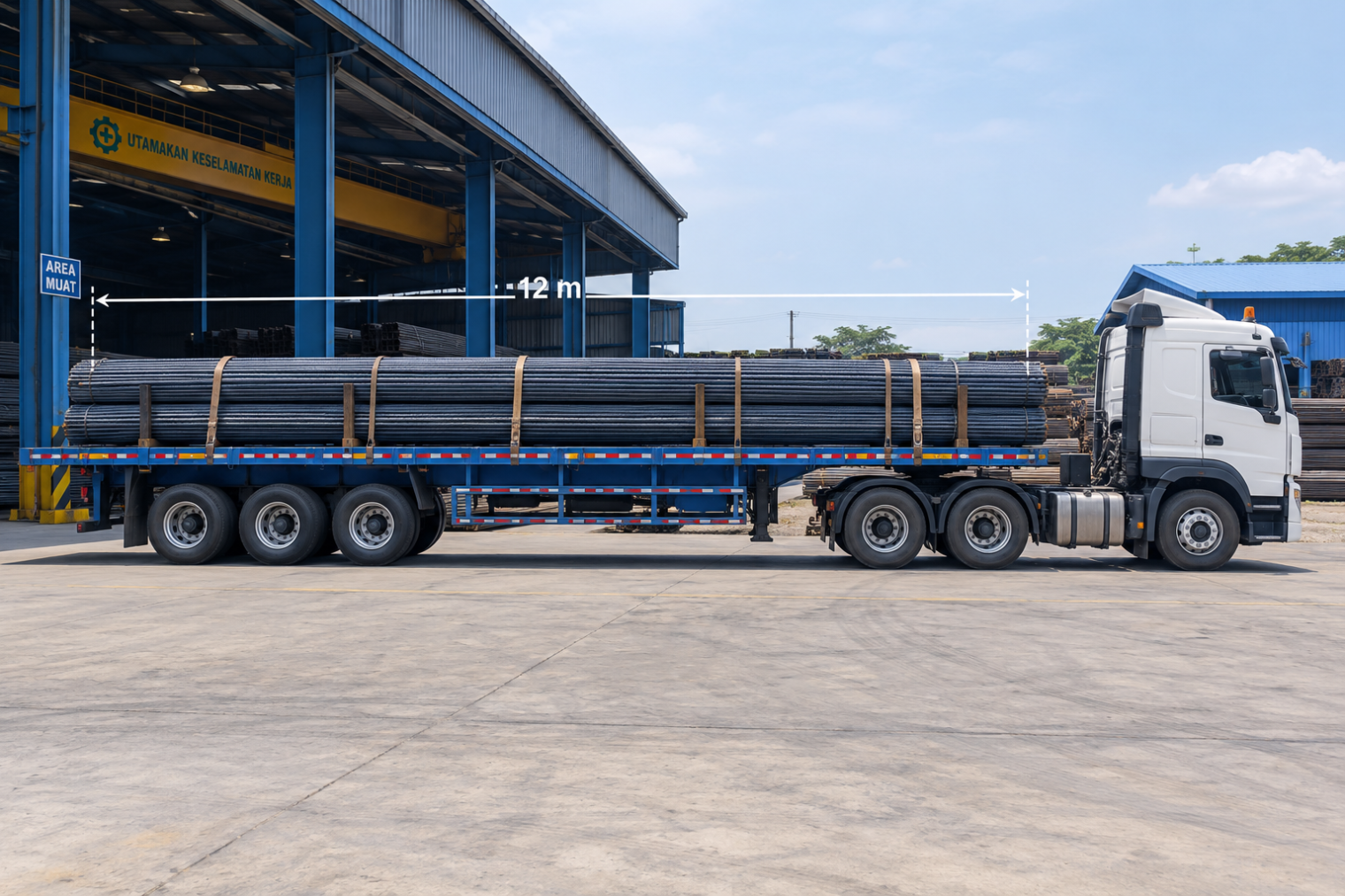
Steel bars used to reinforce concrete, governed by SNI 2052. There are two types: plain (BjTP) and deformed/ribbed (BjTS). Standard length is 12 metres. This is the product Inter World Steel makes at our mill in Tangerang.
Structural steel
Sections such as WF, H-beam, angles, UNP channels, pipes, and plates. These follow different standards and are usually sold by other suppliers. To be clear: Inter World Steel does not produce steel sections or plates, so those needs are best ordered from manufacturers that actually make them.
Why the difference matters
A supplier selling "all kinds of steel" is almost certainly a trader, not a producer. That is not wrong, but it means quality depends on where they source the goods, and you need to request proof of origin.
Four Types of Rebar Supplier and When to Use Them
| Supplier type | Best for | What to watch out for |
|---|---|---|
| Mill (producer) | Projects and distributors buying by the tonne who need a mill certificate per batch | Usually has a minimum order quantity and production schedule |
| Authorised distributor | Mid-size contractors needing ready stock and flexible delivery | Confirm authorised status and which brand is sold |
| Building-material shop | Retail purchases, repairs, or houses | Brands are often mixed; bars are rarely weighed |
| Trader / broker | Urgent multi-brand needs | Origin is hard to trace; request SPPT-SNI and mill certificate |
For a more detailed comparison of mills and distributors, read our guide to choosing a rebar distributor.
Example: Calculating Order Tonnage
Rebar suppliers sell by weight, while drawings usually list the number of bars. Converting a bar list into tonnage lets you compare quotations fairly. The SNI formula: weight (kg/m) = 0.006165 × d², multiplied by the 12-metre bar length.
Example assumption: a shophouse project needs 300 bars of D10, 200 bars of D13, and 150 bars of D16, all 12 m long.
| Diameter | Number of bars | Weight per bar (kg) | Subtotal (kg) |
|---|---|---|---|
| D10 | 300 | 7.40 | 2,220.0 |
| D13 | 200 | 12.50 | 2,500.0 |
| D16 | 150 | 18.94 | 2,841.0 |
| Total | 650 | — | 7,561.0 kg ≈ 7.56 tonnes |
With these figures you can check whether "per bar" and "per kg" quotations from two different suppliers are truly equivalent. If one supplier offers a much cheaper price per bar, weigh a few bars: underweight rebar is often the reason. The full weight table is on our product specification page.
Documents You Must Request from a Supplier
- SPPT-SNI — proof that the product may carry the SNI mark. Match the producer name with the brand embossed on the bar.
- Mill certificate per batch — showing tensile test, yield strength, and elongation results. We explain how to read it in our mill certificate article.
- Delivery note and invoice stating diameter, grade (for example BjTS 420), number of bars, and weight.
- Written quotation with a validity period, because steel prices move with raw material costs.
Inter World Steel certification documents are available on our certification page.
How to Inspect Rebar When It Arrives on Site
Complete paperwork does not guarantee that what comes off the truck matches what is written. Spend 15–20 minutes on these simple checks before signing the delivery note:
- Match the bar markings. SNI rebar carries embossed marks showing the producer brand and size. Make sure they match the SPPT-SNI and mill certificate.
- Weigh a few random bars. Take three to five bars from different bundles, weigh them, and compare with the weight table above. Small differences are normal within tolerance, but a consistent shortfall should be questioned.
- Measure the diameter with a caliper. For deformed bars, measure the core diameter between the ribs, not across the rib tops.
- Check the surface condition. Light surface rust is generally acceptable, but flaking rust, cracks, or badly bent bars should be noted on the delivery note.
- Count the bars per bundle. Compare with the invoice before the truck leaves the site.
A serious supplier welcomes this kind of inspection, because it reduces disputes later.
Common Mistakes When Choosing a Steel Supplier
- Comparing price per bar without weighing. A few percent weight difference across hundreds of bars means hundreds of kilograms of steel you never receive.
- Accepting "SNI-equivalent". No such term exists in regulation; a product is either certified or it is not.
- Not specifying the grade. BjTS 280 and BjTS 420 can look identical, yet their strength differs considerably.
- Ordering rebar and structural sections from one trader without proof of origin. One-stop convenience does not replace evidence of quality.
Frequently Asked Questions
Does Inter World Steel sell rebar directly from the mill?
Yes. We produce plain and deformed rebar certified to SNI 2052:2024 in Tangerang and serve contractors, distributors, steel shops, and projects. For small purchases, our sales team can refer you to the nearest distributor.
Do you supply structural sections such as WF or angles?
No. We focus on rebar (reinforcing steel). For sections, plates, or pipes, please contact manufacturers that produce those items.
Which sizes are available?
Our brochure lists plain bars from 8 to 32 mm and deformed bars from 10 to 36 mm. Stock availability per size changes, so confirm with our sales team before ordering.
What is the current rebar price per kg?
Steel prices follow raw material costs and change over time, so we do not publish them. Send your requirement list and we will provide a written quotation valid at that time.
What information should I prepare when requesting a quotation?
Diameter, type (plain/deformed), grade, number of bars or tonnage, delivery location, and preferred schedule. The more complete the data, the faster the quotation.
Request a Quotation Directly from the Mill
If you are looking for a rebar supplier that can show SPPT-SNI and a mill certificate for every delivery, send your requirement list through the Order Now form or contact our sales team via the contact page. We will help check stock, prepare a quotation, and schedule delivery to your project site.